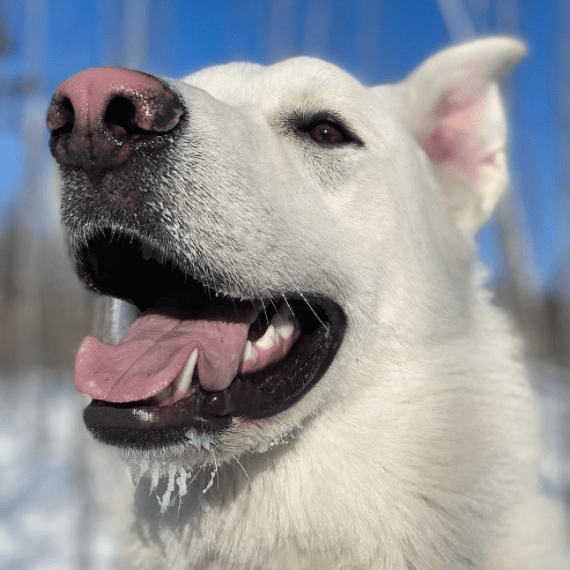
Dogs communicate with their bodies, using a combination of facial
expressions, body postures, and vocalizations to convey their emotions
and intentions. As a dog owner, understanding your dog’s body language
is crucial for better communication and a stronger bond. In this post,
we’ll discuss some tips on how to interpret your dog’s body language
and improve your communication with them.
1. Pay Attention to Their Tail
A dog’s tail can tell you a lot about their mood. A wagging tail can
indicate happiness and excitement, while a tucked tail can indicate
fear or anxiety. However, not all tail wagging is a sign of happiness.
A stiff tail wag or a low wag can indicate that your dog is unsure or
uncomfortable. Or it could simply mean that your dog is excited so be sure to look at more then just the tail!
2. Watch Their Ears
A dog’s ears can also provide valuable information about their mood.
Perked-up ears can indicate that your dog is alert and interested,
while flattened ears can indicate fear or aggression. However, some
dogs have naturally floppy ears, so it’s important to observe their
overall body language.
3. Look at Their Eyes
A dog’s eyes can reveal a lot about their emotions. Dilated pupils can
indicate excitement or fear, while narrowed pupils can indicate
aggression (often called Whale Eye). Direct eye contact can also be perceived as a threat by some dogs, so it’s important to approach them with a relaxed posture and avoid staring directly at them.
4. Observe Their Body Posture
A dog’s body posture can also provide important clues about their
mood. A relaxed posture, with a slightly curved spine and loose limbs,
can indicate that your dog is comfortable and happy. A stiff posture,
with raised fur and a rigid body, can indicate that your dog is tense
or aggressive.
5. Listen to Their Vocalizations
A dog’s vocalizations, such as barking, growling, and whining, can
also provide valuable information about their mood. However, it’s
important to observe their body language and context to understand the
meaning behind their vocalizations. Pro tip: Often a high pitch is a more submissive tone!
In conclusion, understanding your dog’s body language is crucial for
better communication and a stronger bond. By paying attention to their
tail, ears, eyes, body posture, and vocalizations, you can gain
insight into your dog’s emotions and intentions. This will allow you
to respond appropriately and build a deeper connection with your furry
friend.
 HawkWatch
Leave a comment